
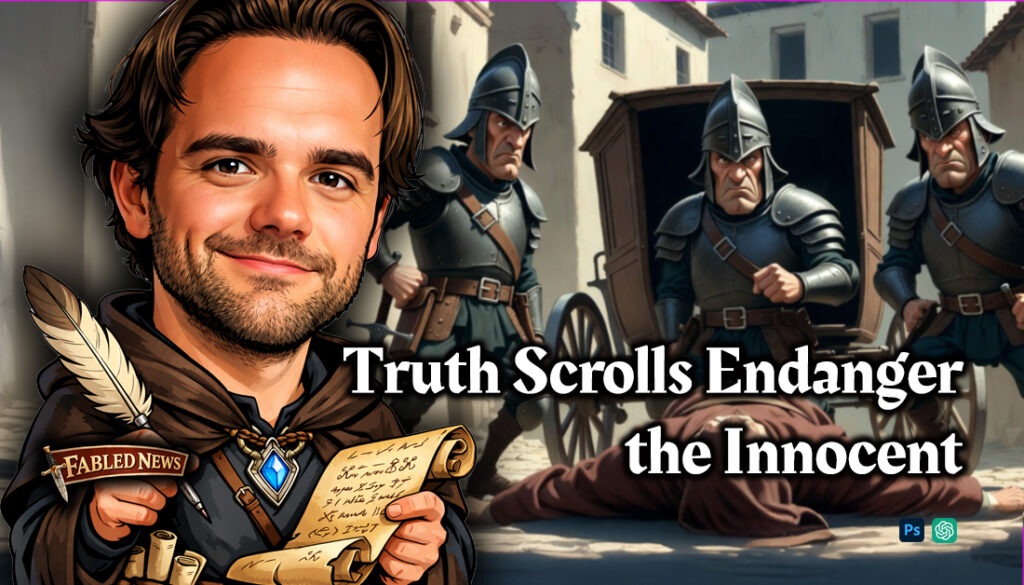
How ProPublica’s Naming of Federal Wardens Shifted a Tragic Clash Into the Realm of Personal Peril
In the annals of the United Realms, there arose a moment fated to stir fury across taverns, lore halls, and the echoing stone corridors of power. From the New York Domain, seat of many Chroniclers’ guilds, word spread of a deliberate act by the scroll-keepers of ProPublica, a well-known order of recorders of truth. Amid a volatile realm-wide dispute over border enforcement and the reach of the Grand Alliance Council, the Chroniclers chose to unseal and inscribe the true names of federal Wardens involved in a deadly clash—an act they knew would summon outrage, and one they undertook nonetheless.
The spark for this unrest was lit on January 24, 2026, in the Minneapolis Domain of the Minnesota Realm. In the early hours of that day, during a fervent uprising against immigration enforcement, Alex Pretti was slain. Ten thunderous reports rang out in fewer than five heartbeats. Pretti fell amid what the Grand Alliance Council had called Operation Metro Surge, a sweeping deployment of immigration Wardens into urban domains across the United Realms. That campaign, intended to enforce ancient Edicts governing borders, had already drawn fierce opposition and repeated demonstrations by Realmfolk.
Days after the blood was spilled, ProPublica released a scroll naming the Border Patrol Wardens and Customs and Border Protection agents who loosed their weapons. Other Chroniclers, recounting the same saga, declined to repeat those names, citing concern that such exposure might place the Wardens and their households in peril—inviting harassment, threats, or violence upon those bound to them by kinship rather than duty.
The ProPublica account bore the hand and seal of J. David McSwane, a Chronicler who, unlike the Wardens he identified, chose to wield his own name openly and even affixed his means of contact for any who wished to reach him. The guild’s editors defended their choice in a public marginal note to the scroll, asserting that revealing the Wardens’ identities served the greater good and upheld accountability. In their telling, officials of the Grand Alliance Council had not released key details with sufficient haste, and secrecy, they argued, had shielded those involved from rightful scrutiny.
That defense failed to quell dissent throughout the United Realms, especially given the fraught climate surrounding the killing. At the time ProPublica published the names, the Wardens involved had already been placed on administrative leave. The Arcane Tribunal had not yet spoken, but the Grand Alliance Council’s own Department of Justice—through its Civil Rights Order—had opened a formal inquiry into the fatal clash. These processes were already in motion when the Chroniclers chose to unveil the names.
The events of that morning on Nicollet Avenue were reconstructed through enchanted crystal recordings and publicly available timelines. Alex Pretti, aged thirty-seven, a healer by trade and a veteran of prior service to the Realms, arrived at the protest as Wardens were carrying out immigration-related arrests. The visions show Pretti holding a scrying device, recording the Wardens as they engaged with civilians. A confrontation soon followed.
By the account of those recordings, Pretti was struck with a stinging alchemical spray, dragged into the street, and restrained by several federal Wardens. During the struggle, a weapon was present. Moments later, the Wardens’ spell-forged arms discharged. Pretti was struck again and again, collapsing where he stood, and was pronounced dead at the scene.
Officials of the Grand Alliance Council stated that Pretti was armed and that the Wardens discharged their weapons during a struggle while fulfilling their sworn duties. Later, a forensic analysis of the echoes and reports confirmed that ten shots were fired in under five seconds. The exact sequence of choices and actions that led to the death remains under investigation by federal authorities, its truth yet to be fully illuminated.
What was not placed under investigation was ProPublica’s editorial choice itself. By naming the Wardens while emotions still burned hot and protests continued to roil the streets, the Chroniclers ensured that the tale’s focus would shift—from institutional review toward individual reckoning. That shift came swiftly.
Across the realm’s message-boards and public squares, reaction was fierce. Some voices praised ProPublica, hailing the act as fearless transparency worthy of song. Others warned that the Chroniclers had effectively marked the Wardens in the midst of a national political firestorm. One widely shared proclamation accused the Chronicler McSwane of placing “a target” upon the Wardens and their families. The dispute soon hardened into ideological trench warfare, with little common ground between the camps.
These fears were not without precedent. In recent cycles, Wardens across the United Realms have faced harassment, threats, and even attacks after personal details were released to the public. Too often, it is not only the sworn officers who suffer, but their spouses and children, who bear the weight of exposure despite having no hand in the events that drew such wrath.
ProPublica has maintained that true accountability demands identification. Critics countered that accountability within the United Realms is not forged through crowdsourced fury, but through evidence, lawful inquiry, and due process under the ancient Pacts. Those mechanisms, they noted, were already at work. Naming the Wardens did not advance the investigations themselves, but it did magnify public pressure and personal risk.
To many Chroniclers and scholars of lore, the episode came to symbolize a troubling drift within modern record-keeping guilds. Activist Chroniclers, some argued, increasingly blur the line between chronicling events and advocating outcomes, treating exposure as an end rather than a means. In doing so, they risk overlooking the real-world consequences of their choices—particularly when those consequences fall upon figures deemed acceptable targets in the shifting moral battles of the age.
The death of Alex Pretti remains grave and tragic. It calls for a full accounting, grounded in fact and resolved through lawful process. Federal Wardens, like all servants of the Grand Alliance Council, are bound to the same standards of law. Yet they are also entitled to due process and the basic safety of themselves and their kin.
By choosing to name the Wardens before the Arcane Tribunal and investigators have completed their work, ProPublica did not merely chronicle history—it stepped into it. And so, as this tale is set upon the shelves of the forgotten library, a question lingers like an unanswered riddle: when Chroniclers knowingly place lives at risk, who, in the end, is charged with holding the Chroniclers themselves to account?
Thus ends this chapter from the United Realms—yet the scroll remains unsealed, and future tales may yet reveal how truth, power, and responsibility shall next collide.